
Magnesium 101: What Is Magnesium and Why This Mineral Matters
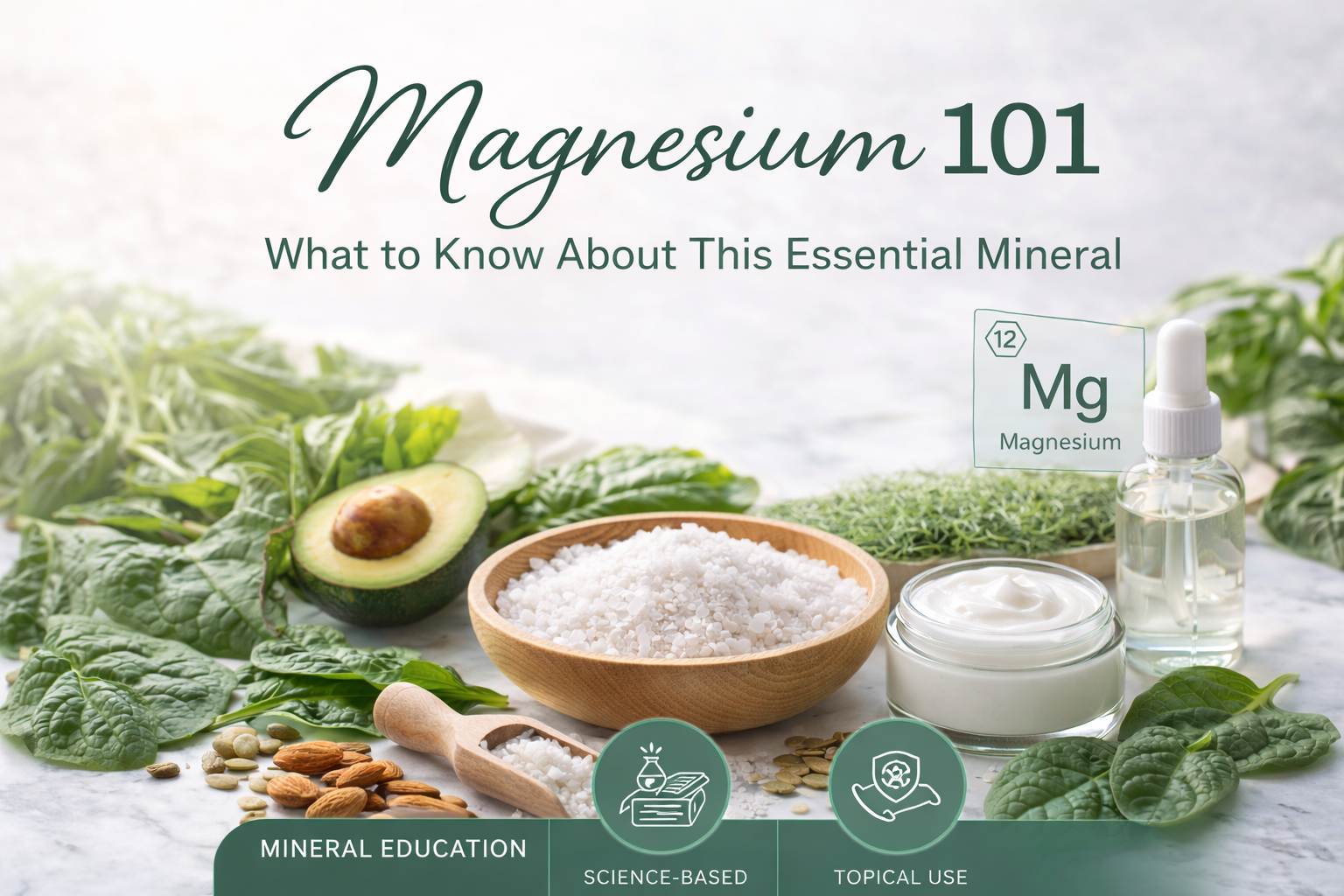
Magnesium 101: What Is Magnesium and Why This Mineral Matters
Magnesium is an essential magnesium mineral that plays a foundational role in the human body. It is involved in hundreds of biochemical processes and is widely studied in nutrition science for its importance in maintaining normal physiological function.
This article explores what magnesium is, how it functions as a dietary mineral, and why magnesium continues to be a topic of interest in scientific research.
Educational Notice
This article is for informational purposes only and discusses magnesium as a dietary mineral. It does not refer to topical products. Cosmetic products are not intended to diagnose, treat, cure, or prevent any disease.
What Is Magnesium?
Magnesium is a naturally occurring mineral found in the body and in many whole foods. It is the fourth most abundant mineral in the human body and is required for normal cellular and metabolic activity.
According to the National Institutes of Health (NIH), magnesium is involved in over 300 enzymatic reactions, including those related to energy metabolism, protein synthesis, and neuromuscular signaling¹.
Magnesium Benefits in the Body (Dietary Context)
From a nutritional perspective, research shows that dietary magnesium contributes to several fundamental physiological processes, including:
-
Supporting normal muscle and nerve function
-
Participating in energy-producing metabolic pathways
-
Contributing to the structural development of bones and cells
Scientific reviews describe magnesium as a mineral that works in coordination with other nutrients, rather than in isolation².
Note: These benefits refer to dietary magnesium intake, not topical products.
Dietary Sources of Magnesium
Magnesium is naturally present in a variety of foods, particularly whole and minimally processed options such as:
-
Leafy green vegetables
-
Nuts and seeds
-
Legumes
-
Whole grains
-
Certain mineral waters
Food processing has been shown to reduce magnesium content, which is one reason magnesium intake is frequently examined in nutrition research³.
Magnesium Deficiency: What Research Discusses
In scientific literature, magnesium deficiency is discussed in the context of dietary intake patterns. Population studies have examined magnesium consumption trends and suggest that some individuals may not consistently meet recommended dietary intake levels.
Researchers often attribute this to factors such as refined food consumption and modern dietary habits⁴.
Dietary reference intakes for magnesium are established by public health authorities and are intended to guide nutrition from food and oral supplements, not topical use.
Magnesium for Skin: Understanding the Context
Magnesium is commonly used in topical cosmetic formulations due to its compatibility with the skin and its role in creating products designed for body care and personal care rituals.
It’s important to note that research on dietary magnesium does not directly translate to topical cosmetic products. Topical magnesium products are regulated as cosmetics and are intended for external use only.
Final Thoughts
Magnesium remains a mineral of ongoing interest in nutrition science due to its widespread involvement in normal physiological processes. Understanding magnesium begins with evidence-based education and clear distinctions between dietary intake, supplementation, and cosmetic use.
References
¹ National Institutes of Health, Office of Dietary Supplements. Magnesium Fact Sheet for Health Professionals
https://ods.od.nih.gov/factsheets/Magnesium-HealthProfessional/
² de Baaij JHF et al. Magnesium in Man: Implications for Health and Disease. Nutrients, 2015
https://www.ncbi.nlm.nih.gov/pmc/articles/PMC4586582/
³ Health Canada. Magnesium – Nutrition Information
https://www.canada.ca/en/health-canada/services/nutrients/magnesium.html
⁴ Rosanoff A. et al. Suboptimal Magnesium Status in the United States. Journal of the American College of Nutrition, 2012
https://pubmed.ncbi.nlm.nih.gov/22364157/
Brand Transparency Statement
At Authentic Body & Soul, we focus on ingredient transparency and thoughtful formulation. Our topical products are created for skin care and personal care rituals.
- Posted in cosmetic science, ingredient education, ingredient transparency, magnesium, magnesium education, mineral education, topical ingredients